
The early shift
Hospital, airport, and kitchen crews start before six in the morning, when a lot of routes are still running every half hour or not yet running at all. Off-peak service is the difference between a bus and a car payment.
On the Ballot This November
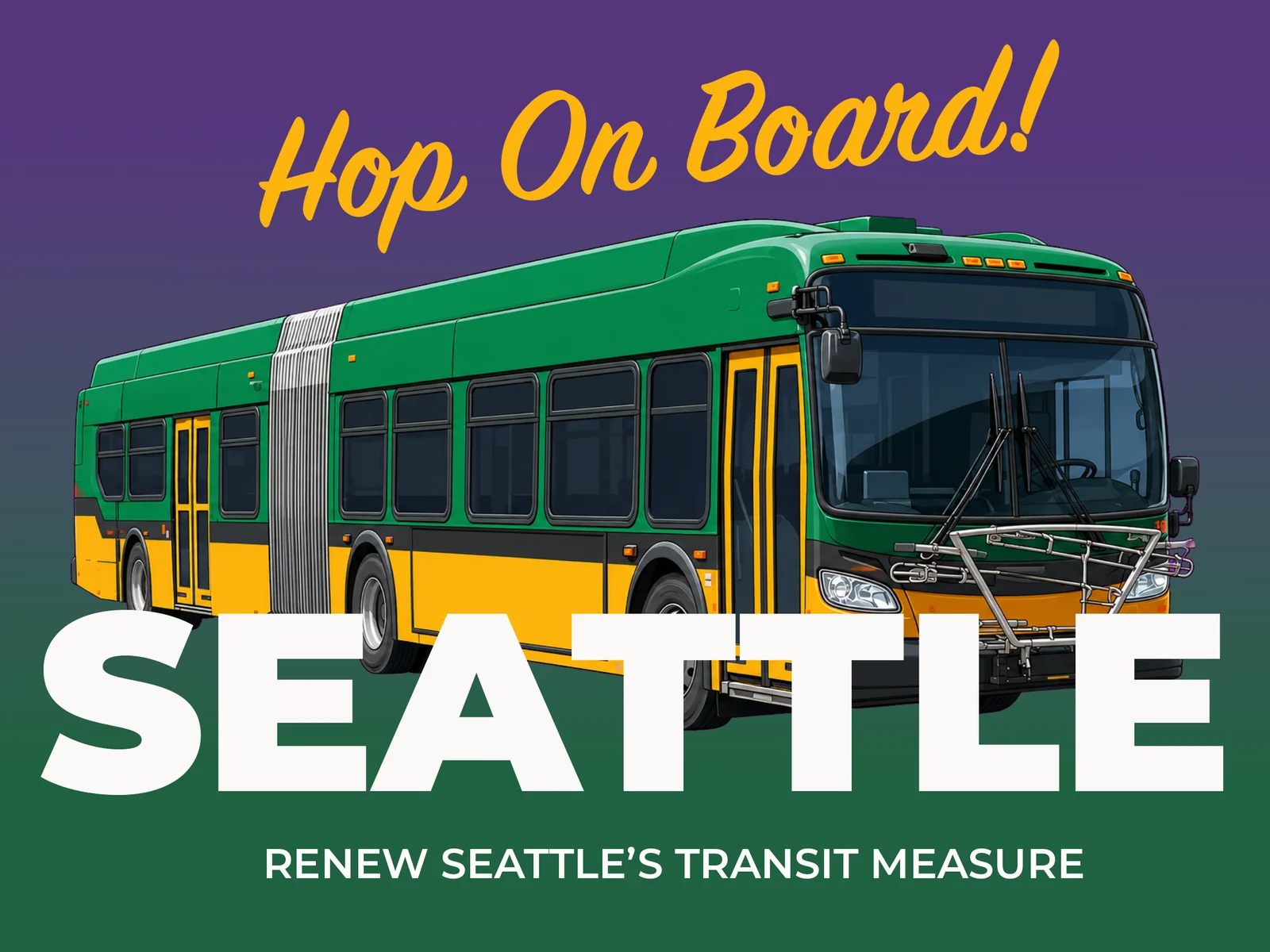
Since 2015, this measure has increased Seattle's bus service. Set to expire in 2027, it's now up for renewal, and the Seattle City Council has unanimously backed an expanded version: 95,000 more bus trips each year, night and weekend service you can actually count on, and twice as many free ORCA passes for riders who need them most.
95,000 more bus trips than today, and most of them added at the hours when service thins out now: nights, weekends, and midday. That brings Seattle to 89% completion of its Frequent Transit Network.
Keeps streetcar service running. Funds day-to-day streetcar operations, keeping it part of Seattle's transit network alongside expanded bus service.
Twice as many free passes, from 10,000 today to 22,000. They go to low-income riders, Housing Choice Voucher participants, preschool families, and Seattle Promise scholars, so cost isn't what keeps someone off the bus.
Gets Seattle ready for the next stations. Funds the planning, engineering, and sidewalk and bike design work around future Link stations at Graham Street, West Seattle, and Ballard. It's the unglamorous work that decides whether a station is easy to walk to.
Buses that stop waiting in traffic. Bus lanes, signals that hold green for an approaching bus, shelters, and lighting at stops, so the schedule on the sign is closer to the bus that actually shows up.
Most of what this renewal buys happens outside rush hour, which is exactly when Seattle's buses thin out today. Here's who that changes things for.
Hospital, airport, and kitchen crews start before six in the morning, when a lot of routes are still running every half hour or not yet running at all. Off-peak service is the difference between a bus and a car payment.
Weekends are when families actually go places: the park, the library, a game. A bus every 15 minutes instead of every 30 is what makes the trip worth taking without a second car in the driveway.

Restaurant and retail workers, students, and anyone out for the evening need a ride that still exists when their night ends. This renewal puts real money into late service instead of treating it as a nice-to-have.
Seattle voters first approved a transit funding measure in 2014. It's set to expire in 2027, and this November voters decide whether to renew and expand it. The proposal renews the dedicated transit sales tax for 10 more years and raises it from 0.15% to 0.3%, raising an estimated $138 million a year to fund 95,000 more bus trips, night and weekend service that actually shows up, and twice as many free ORCA passes for riders who need them most.
More buses, and more of them at the hours people actually need to ride. Metro trips paid for by the measure go from 180,000 a year to about 275,000, 95,000 more than the current STM, and 84% of that new service lands off-peak: nights, weekends, and midday.
For a nurse starting a shift at six in the morning, that is the difference between catching a bus and making a car payment. For a family heading to the park on a Saturday, it's a bus every 15 minutes instead of every half hour. For someone leaving a restaurant job at midnight, it's a ride home that still exists.
It also brings Seattle to 89% completion of its Frequent Transit Network, doubles free ORCA passes from 10,000 to 22,000, and pays for the planning and design work around future light rail stations at Graham Street, West Seattle, and Ballard.
Most directly, the people who depend on the bus: riders with disabilities, seniors, young people not old enough to drive, and working families for whom a second car isn't realistic. The expanded ORCA program puts free passes in the hands of low-income riders, Housing Choice Voucher participants, preschool families, and Seattle Promise scholars.
The off-peak service is what matters for shift workers, for families getting around on the weekend, and for anyone coming home late at night.
And it helps people who never set foot on a bus. Every trip that happens on transit is a car that isn't ahead of you in traffic, and cleaner air for everyone in the city.
About $29 a year for the median two-person household in Seattle, less than one bus fare a month.
The measure raises the dedicated transit sales tax from 0.15% to 0.3%, which works out to about 3 cents on a $10 purchase, up from about 1.5 cents today. Groceries and prescription medications aren't subject to sales tax in Washington, so the things families buy every week aren't part of it.
Anyone who makes a taxable purchase inside Seattle city limits, including visitors, commuters, and people passing through. Tourists, conference-goers, and shoppers who live elsewhere all pay it, which means a real share of the revenue comes from people who don't live here but use the city all the same.
Because it's one of the few tools state law gives a city to pay for bus service. Washington tightly limits how cities can raise transit money. A sales tax through a transportation benefit district is the main option available at this scale, and it's what Seattle voters approved in 2014 and again in 2020. A city income tax isn't permitted, and property tax capacity is already committed elsewhere.
A sales tax isn't the most progressive way to raise revenue, and we'd take better options if the state offered them. But the alternative falls harder on the people who can least afford it: a city where bus service shrinks and more households are pushed into owning a car, which costs thousands of dollars a year, not tens.
The current measure expires in 2027. Without renewal, all current STM funding would be cut. Seattle would lose the service it has gained since 2020, including more frequent buses, streetcar operations, and discounted ORCA passes, along with every added trip and access program this renewal would fund.
Yes. The 2020 version passed with over 80% voter support and delivered results you can point to: Route 60, for example, now runs every 15 minutes on weekends instead of every 30.
SDOT keeps the official page for the renewal, including the spending plan and the ordinance the Council sent to the ballot: 2026 Seattle Transit Measure Renewal.
The City Council's page on the measure is here, and background on the existing program is on SDOT's Seattle Transit Measure page.
Have another question? Contact the campaign.
A growing coalition backing this renewal:
 Martin Luther King County Labor Council
 Amalgamated Transit Union Local 587
 King County Democrats
 Seattle Streets Alliance
 350 Seattle
 Seattle Transit Blog
 Transportation Choices Coalition
 34th Legislative District Democrats
 36th Legislative District Democrats
 37th Legislative District Democrats
 43rd Legislative District Democrats
 46th Legislative District Democrats
…and many more.
Chip in to help us reach voters before Election Day. Every dollar helps us knock doors, make calls, and make the case for why this renewal is worth it.
This campaign is powered by people. However you can pitch in, we can put you to work.
This election is decided by turnout. Door-to-door canvassing is the most effective way to move votes. Join us most weekday evenings and weekends through Election Day.
Sign Up to Knock DoorsWe want to meet bus riders where they are. Join us at a stop near you.
Sign Up to CanvassFundraising, flyering, hosting a house party, spreading the word online: tell us how you'd like to help.
Sign UpLoading upcoming events…